The Parents' Guide to Gap Years
- Mar 31, 2023
- 5 min read
Updated: Jul 22
Gap years have a way of making even the most stoic parent pause. The thought of your child taking a year out from their study, their journey, their life, is a challenging concept for many. You may have the odd few parents who took a gap year themselves (or wished they had), but on the whole, gap years have this rather exotic, 'not quite for us' feel about them.

What is a gap year?
First becoming popular in the 1960s, with the baby boom generation wanting to shed the austerity of post-war Britain and explore new cultures, the 1970s saw the gap year industry evolve, with organisations such as Operation Raleigh offering students structured travel opportunities. This was, however, mainly the preserve of those with the means and the privilege of taking a year out of life. Fast forward 50 years, with the internet and mobile phones now connecting us wherever we are, and the arrival of tuition fees, and the world is a very different place.
So, should our perceptions of gap years have also changed? Is the opportunity to take a year out before university and beginning your professional life something we should be encouraging our children to do?
Should my child take a gap year?
First, the arguments for a gap year. Students come to gap years for all sorts of reasons.
Reasons to take a gap year
To spread their wings and become more mature, confident and independent.
For a well-earned mental break after the slog of GCSEs and A levels.
To apply to university without the stress of exams, and with guaranteed grades under their belt.
To earn money.
To gain skills and experiences relevant to their next steps.
To gain skills and experiences irrelevant to their next steps, but equally important to developing as a rounded individual.
It all sounds great, so what’s not to like? Well, step forward the prosecution.
Reasons not to take a gap year
A year out will make their brains grow idle.
It’ll be difficult to re-engage with their studies at the level they need for university.
It’ll be expensive (and you’ll probably end up footing the bill).
A disorganised, unstructured gap year won’t add anything to their progression.
They may end up never going to university and fulfilling their potential.
And the most chilling thought by far: they end up living at home forever.
So how do you answer the question, 'to gap year or not to gap year?' Honestly, it all boils down to the individual and their circumstances.
Who (probably) shouldn’t take a gap year?
If we’re looking at someone who:
has a very clear-cut idea of where they want to go
is on track with their university offers
is taking their A levels in their stride and is very much focused on their next steps
…then why change a winning game?

Who should consider a gap year?
If, however, one of these aspects isn’t quite in kilter, it could be good reason to think on. Why?
If your child has applied for a course but isn’t 100% convinced it’s the right one, it can be an expensive mistake, and often leads to students either dropping out or changing course and having to reapply for the next academic year. Not ideal, as they’re then kicking around on a very unexpected and unplanned gap year.
If your child doesn’t get their offers and pins their hopes on clearing, or has their offer but with ambitious grade requirements they don’t quite make on results day, they’re caught in the bun fight that is clearing. If they then don’t get onto the course they want, they may settle for second best just to go 'somewhere'. With this, there’s an increased risk of point 1 above.
Finally, this stage of study is incredibly demanding, even on the toughest. Going straight to university without the chance to press 'refresh' could lead to burnout or underperformance when they get there.
In any of these circumstances, a planned and well-organised gap year could be the right move. There are many valuable options out there, and there really is something for everyone.
What to do on a gap year
So, your child is taking a year out. The next question is, 'what should I do on my gap year?' Great gap year ideas abound, but here are three of the most popular.

Gap year travel
Travel is always a good option for those looking to take time to refresh, have new experiences and develop their independence. Tying travel in with personal growth can also be achieved, learning a language and gaining some work experience along the way. Just don’t forget your travel insurance!
Gap year jobs
Work experience is a great option, as you’re getting paid, developing your personal and professional skills, and really getting a foothold on the professional ladder. For example, dedicated gap year programmes from companies such as Yipiyap provide high-quality, paid work experience for school leavers working as academic tutors in local schools and colleges.
Gap year volunteering
Volunteering can also be a personally rewarding and valuable way to spend time out. This can often be tied in with travel and future career plans, and ticks many boxes. Or, for something closer to home, look online for volunteer opportunities near you; there are bound to be plenty.
How to apply for uni after a gap year
Some students worry about whether they’ll lose momentum with university applications or their career after a gap year, but there’s really no reason to panic. Research shows that gap year students who’ve spent a well-organised and productive year are typically:
more confident, independent, worldly and invigorated
more evolved in skills such as teamwork, leadership, communication and organisation
able to point to something 'different' that makes them and their CVs stand out from the crowd
liked by universities and employers, because they’re more mature and motivated and bring more experience to the table (they’re also statistically more likely to achieve a higher class of degree; Claggett, R. (2013))
ready to take on their next steps
How to plan a gap year
Gap years are never going to be everyone’s cup of tea, but they’re certainly not the abstract proposition of yesterday anymore, and offer great advantages for a year spent productively.
There are many companies that specialise in helping individuals achieve exactly what they want from their year out. Oxford student Sam Kramer worked with Yipiyap on his gap year, and wrote about how it helped him reapply to Oxbridge and get into his first-choice university.
About the author
This is a guest post by Catherine Birkett, co-founder and COO of Yipiyap. Yipiyap has been instrumental in developing the peer tutoring sector for over a decade, working alongside gap year students to provide relatable peer tutors to schools and colleges across the UK.


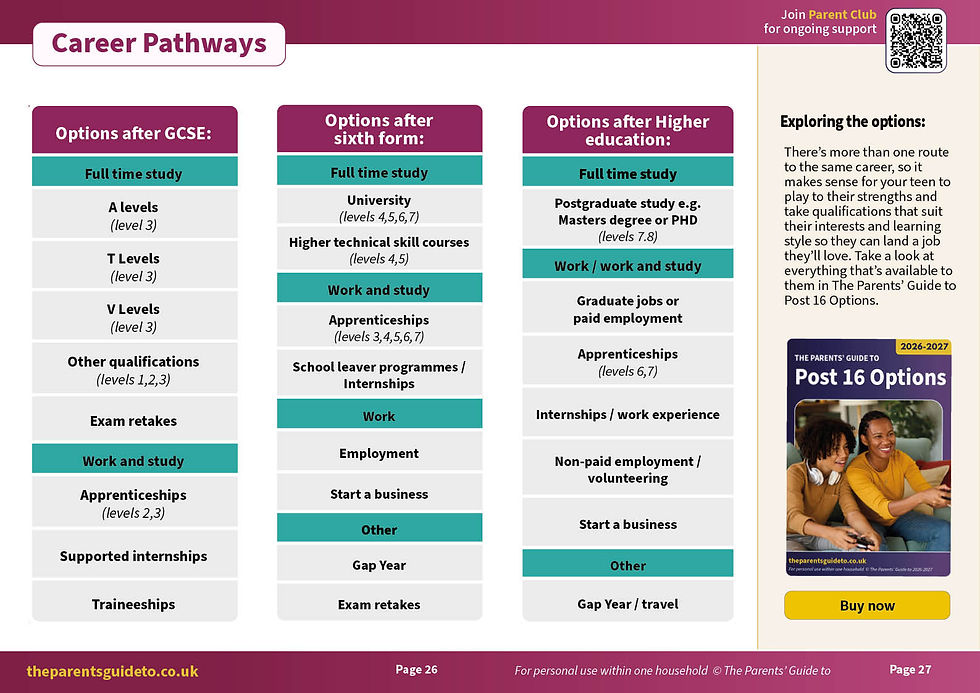
Not sure what your teen should do after sixth form?
Or if you’d like a hand at every stage of their journey, join Parent Club →




Comments