A dream career isn’t luck – it’s built
Updated: Jul 22
Whether your teen’s taking their next career step through higher education, an apprenticeship, training or their first job, the skills they’ve gained up to that point will matter, in most cases as much as the qualifications they achieve.
Skills aren’t only learned in the classroom; they’re learned through experience. Your teen is developing their skillset every day, through interactions with friends and family, and through the hobbies and interests they choose to pursue. While skills are important in the workplace, they’re just as valuable for everyday life too.
Let’s look at why skills count and how to help your teen get them.
Why employers care about skills
Teens applying for their next opportunity will be of a similar age, have studied similar subjects and might even have similar grades. Interviewers need something else to decide which candidates could be the best fit for their organisation. This is where skills come in.
Interviewers will interpret your teen’s skillset as an indicator of their personality, their ability to manage workload and how they cooperate with others.

How skills convert interests into great careers
Skills cover a wide range of personal strengths that help people communicate, collaborate and flourish. There are many different skills, and no one is gifted at every single one. Your teen will have their own unique combination of strengths. Looking for jobs that involve their top skills is more likely to result in a rewarding career. Don’t forget, different jobs require excellence in different skills, so there’s usually something to fit all personalities.
Soft skills are transferrable between different roles and industries, so the skill remains useful even when the job changes.
Employers know which skills are valuable in each job and they're actively seeking candidates who have them. If your teen can show a good track record in certain skills, it gives them the chance to choose roles that align with their likes and values, rather than settling for what's available.
Top skills interviewers seek out
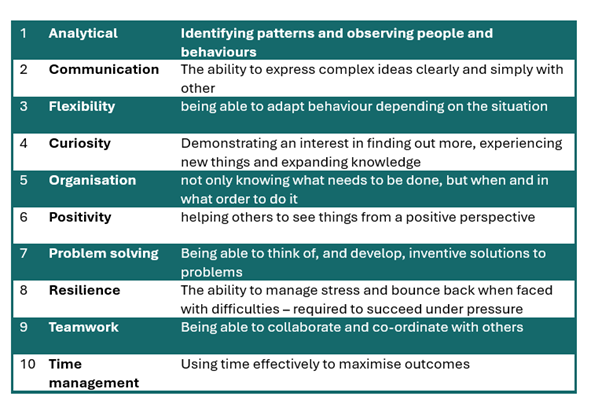
Connecting hobbies with skills
Entering competitions is a great way to demonstrate a variety of skills useful in the workplace (working to a specification and deadlines, showing passion and initiative), whilst music, sports and languages are always valued as they demonstrate commitment, the ability to multi-task, communication and often team work.
Parents: help your teen build their skills
Your teen’s developing their skillset all the time and there’s no end date. However, limitations can arise if they don’t stretch themselves through new experiences and new approaches. If they only stick to what they know, they aren't going to discover new likes and new skills. This doesn’t mean they have to do new things all the time. Here’s how to give them a guiding hand towards maximising their potential:
Check our “skills employers love” list. Ask your teen to pick their favourite 3 (there’s no right answer).
Help them list the 3 skills they feel strongest in. Does this match their favourite 3?
Chat about careers where these skills might be useful.
Ask your teen to give real-life examples that show them using certain skills.
Encourage a healthy mix of social activities and time on their own.
Explore a broad range of interests over Years 10 to 13, but ensure some consistency term on term.
Support them if they want to delve deep into a hobby over many years, so long as it demonstrates progression.
Check whether they’re enjoying their hobbies, or doing them to fit in with others.
Join our Parent Club! Find out the top 20 skills employers look for, discover which hobbies build them, and help your teen develop the skills that matter to them.

Skills are the building blocks to a dream career
Skills are the building blocks that turn dreams into action and action into success. Never underestimate the power of small, consistent actions in making dreams a reality.
This is just a snippet from The Parents' Guide to Developing Skills and Character. If you’d like the full version, with clear, up-to-date advice, practical tips and actions you can take at home, click below.
Want to help your teen build skills for the future?
Or if you’d like a hand at every stage of their journey, join Parent Club →